
TEXT US
Aom
October 2, 2026
Do not hesitate to contact us. Your enquiries is most welcome.
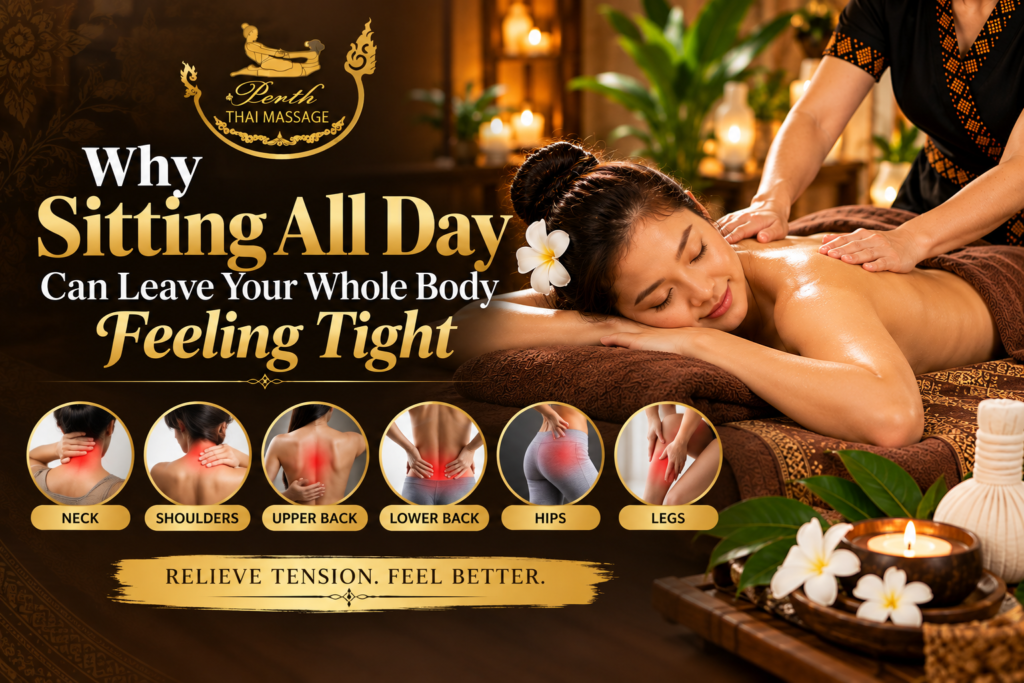
Sitting may not feel physically demanding, but spending hours in the same position can leave more than just your back feeling tired. Your neck, shoulders, hips and even your legs can start to feel stiff after a long day at a desk, behind the wheel or in front of a screen.
For people with desk-based routines, a Body Massage Perth treatment can provide dedicated time to relax and give several tired muscle groups some attention. Combined with regular movement and healthy everyday habits, massage can be an enjoyable part of looking after your body after long periods of sitting.
So why can sitting leave your whole body feeling tight, and which areas tend to notice it most?
Your body is designed to move.
When you remain seated for extended periods, certain muscles stay in similar positions for a long time. Your working posture, desk setup and how frequently you get up and move can all influence how your body feels at the end of the day.
You may notice yourself:
These everyday signals may simply be your reminder that your body needs more movement and attention.
At Perth Thai Massage, our Body Massage Perth service offers total body care for people looking to relax after busy days and give tired muscles some dedicated attention.
Think about where your head is positioned while you work.
If your computer screen is too low or you regularly look down at a laptop or phone, you may spend considerable time with your head and neck in a similar position.
By the end of the day, you might notice stiffness when turning your head or feel the urge to stretch your neck.
Regularly changing position and taking short movement breaks can help break up long periods of sitting.
During a body massage, you can also tell your therapist if your neck is one of the areas where you commonly notice muscular tension.
Shoulders are another common problem area for desk workers.
While concentrating, typing or dealing with a busy workload, some people unintentionally tense or raise their shoulders.
You may only realise you are doing it when you finally relax them.
Over a full working day, this can contribute to that familiar tight feeling across the shoulders and upper body.
A massage can give these muscles some dedicated attention while allowing you to relax away from your usual work environment.
Every so often, pay attention to where your shoulders are sitting.
Are they relaxed, or are you holding them higher than necessary?
Small moments of body awareness throughout the day can help you recognise habits that may contribute to everyday muscular tension.
Your neck, shoulders and upper back work closely together.
If you spend hours leaning slightly towards your computer, working on a laptop or maintaining the same seated position, you may notice tiredness across your upper back by the afternoon.
You might find yourself sitting upright and stretching backwards simply because it feels good to move in the opposite direction.
A full body massage can include attention to your upper back along with the surrounding shoulders and neck.
Your lower back can also become noticeable after prolonged sitting.
The chair you use, your sitting position, how your workspace is arranged and how often you move can all affect how comfortable you feel throughout the day.
Rather than remaining seated for several hours without interruption, try to incorporate opportunities to stand and move when practical.
If your lower back simply feels tired after a long working day, you can let your massage therapist know that you would like additional attention given to this area.
Persistent, severe or unexplained back pain should be assessed by an appropriate healthcare professional.
Your hips may not be the first place you associate with desk work.
However, sitting means keeping them in a relatively fixed position for extended periods.
After several hours at your desk, you may notice stiffness when you first stand or feel the need to walk around and stretch.
This is another reason whole-body care can be useful for people with sedentary routines. The effects of sitting are not necessarily limited to your back.
It may seem strange for your legs to feel tired when you have spent most of the day sitting, but many desk workers recognise the feeling.
After hours with limited movement, you might find yourself wanting to stand, walk or stretch your legs.
Regular movement throughout your working day is important. If possible, stand periodically, walk around and change position rather than remaining seated continuously.
During a full body massage, your therapist can also give your legs attention alongside your upper body.
Sudden or unexplained leg pain, swelling, redness or other concerning symptoms should be medically assessed rather than assumed to be normal muscle tension.
One of the biggest reasons desk workers may feel generally tight is that prolonged sitting can involve several parts of the body at once.
Your neck may feel stiff from looking at a screen.
Your shoulders may feel tense from typing.
Your back may feel tired from sitting.
Your hips may feel stiff when you stand.
Your legs may simply want to move.
When multiple areas feel tired at once, a full body massage in Perth allows you to give attention to more than one muscle group during the same treatment.
Massage can be part of your self-care routine, but it should not be your only strategy for dealing with long periods at a desk.
Try building more movement into your normal day.
Stand up regularly when possible. Walk around during appropriate breaks. Change your sitting position instead of remaining completely still. Consider whether your desk, chair and screen are positioned comfortably.
Even simple habits such as getting up to refill your water or walking during part of your lunch break can create opportunities to move.
If your work requires extended sitting, consistency matters more than waiting until the end of the week to think about movement.
A body massage can be an enjoyable option if your work routine leaves several muscle groups feeling tired or tense.
Rather than focusing exclusively on one area, a full body treatment can give attention to your neck, shoulders, back, arms and legs according to your preferences.
Before your massage starts, tell your therapist about your work routine and where you tend to feel tension.
You can also communicate your preferred pressure and let your therapist know at any point if something feels uncomfortable.
Massage is intended to complement general self-care. Persistent pain, injuries, numbness, unexplained swelling or other concerning symptoms should be discussed with an appropriate healthcare professional.
Want more practical tips for looking after your body between massage appointments?
Follow Perth Thai Massage on Facebook for massage information, service updates and simple body-care tips for busy lifestyles.
Continue exploring our guides about massage, relaxation and caring for tired muscles.
Previous: Body Massage for Muscle Tension: Which Areas Need the Most Attention?
Next: Body Massage After a Long Working Week: Helping Tired Muscles Recover
Sitting all day might be part of your job, but spending hours in the same position can leave your neck, shoulders, back, hips and legs asking for some attention.
Regular movement, comfortable working habits and time away from your desk can all form part of looking after your body.
When you are ready for some dedicated relaxation time, a Body Massage Perth treatment at Perth Thai Massage can give tired muscles throughout your body some much-needed attention.
Explore our Body Massage Perth service and make time to step away from the desk, slow down and relax.